Why Ant Keeping Is Exploding in Popularity
Ant keeping is quickly becoming one of the most fascinating—and surprisingly relaxing—hobbies in the world. It’s affordable. It’s low maintenance. And unlike traditional pets, it offers something completely different: The chance to watch a living, evolving system grow from a single queen into a thriving colony. Once you start, it’s hard to stop.
What Makes Ants So Unique?
Ants aren’t just insects—they’re superorganisms.
- Each colony functions like a single living entity
- No leader, yet perfectly coordinated
- Communication happens through invisible chemical signals
There are trillions of ants on Earth, and they’ve mastered survival in nearly every environment imaginable. When you keep ants, you’re not just observing bugs—you’re watching nature’s most efficient society at work.
How to Start Ant Keeping (Beginner Setup)
Starting your first ant colony is much easier than you think.
Step 1: Get a Queen Ant
Your entire colony begins with a fertilized queen.
These are usually found after nuptial flights (warm days after rain).
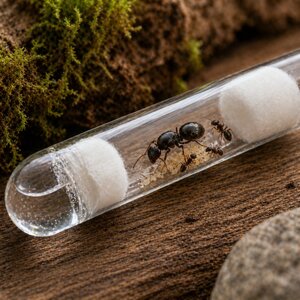
Step 2: Use a Simple Test Tube Setup
This is the gold standard for beginners:
- Water reservoir (humidity source)
- Cotton barrier
- Enclosed space for the queen
This mimics how ants naturally start colonies underground.
Step 3: Leave Her Alone (Seriously)
This is where most beginners fail. For many species:
- No feeding needed
- No checking every day
- No moving or disturbing
The queen is doing critical work—laying eggs and raising her first workers.
What to Expect (Realistic Timeline)
Ant keeping is not instant gratification—and that’s exactly why it’s so rewarding.
- Week 1–3: Queen lays eggs
- Week 3–6: Larvae develop
- Week 6–10+: First workers emerge
Once workers arrive, everything changes. The colony becomes active, organized, and incredibly engaging to watch.
What Do Ants Eat?
Once your first workers appear, feeding begins.
Basic Ant Diet:
- Sugars: honey, sugar water (energy)
- Protein: insects (growth and brood development)
Different species vary, but this simple combo works for most beginner ants.
5 Beginner Mistakes That Kill Colonies
Avoid these, and your success rate skyrockets:
- Checking Too Often: Ants need darkness and stability—constant light = stress.
- Feeding Too Early: Claustral queens don’t need food. Feeding too soon = mold.
- Moving Too Fast: Upgrading to large setups too early can harm colony growth.
- Overfeeding: Small colony = small food needs.
- Impatience: Ant keeping is slow. That’s part of the experience.
Why People Get Hooked on Ant Keeping
At first, it seems simple. Then you notice patterns:
- Workers dividing roles
- Efficient food trails forming
- Brood being moved based on temperature
You’re no longer just watching—you’re understanding. And that’s where the hobby becomes addictive.
Ant Keeping Changes How You See the World
After a while, you’ll start noticing ants everywhere:
- In cracks in sidewalks
- Under rocks
- Along fence lines
What once looked random now looks organized and purposeful. You realize the ground beneath you isn’t empty—it’s alive.
Final Thoughts: Start Small, Think Big
Every massive ant colony starts the same way: With a single queen… and patience. If you’re willing to slow down, observe, and learn—you’ll gain access to one of the most fascinating hobbies out there. And once your first workers arrive? You’ll be hooked.
Want to Go Beyond the Basics?
This guide gives you a strong start—but there’s a lot more to master if you want real success.
If you’re serious about ant keeping, you’ll want a deeper understanding of:
- How to identify species correctly
- When and where to find queen ants
- Advanced feeding strategies by species
- Building proper formicariums and outworlds
- Preventing mold, mites, and colony collapse
- Managing colonies long-term
The Complete Ant Keeper’s Manual is a full, in-depth guide designed to take you from your very first queen to a thriving, long-term colony.