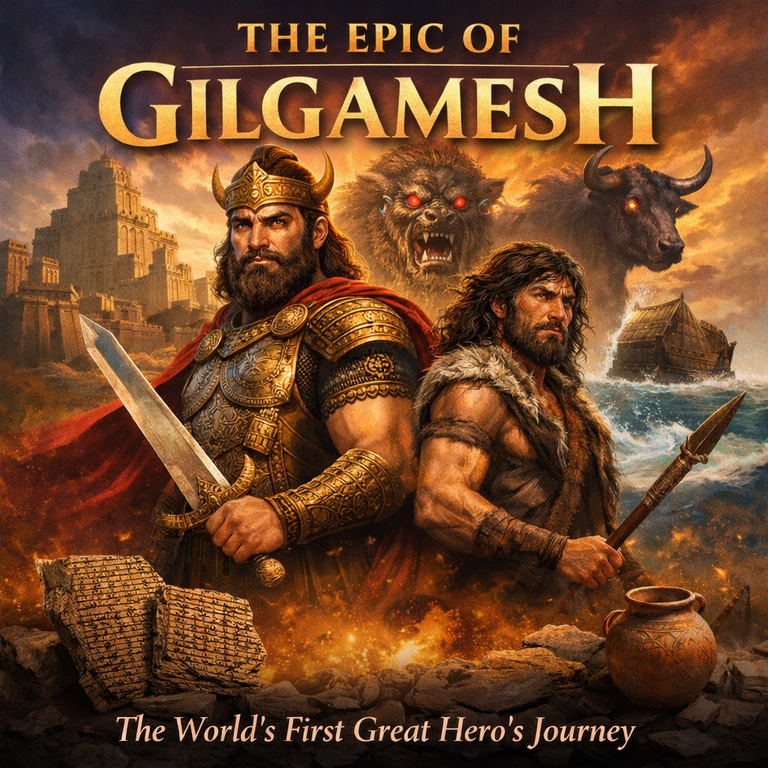
The Epic of Gilgamesh: The World’s First Great Hero’s Journey
Long before The Odyssey or The Iliad, before Homer gave voice to Odysseus and Achilles, there was Gilgamesh — a figure whose story stands as the earliest great epic in human literature. This ancient Mesopotamian poem, carved in cuneiform on clay tablets over four millennia ago, chronicles the rise and transformation of a king and the timeless questions of life, loss, and legacy.
A King Both Mighty and Flawed
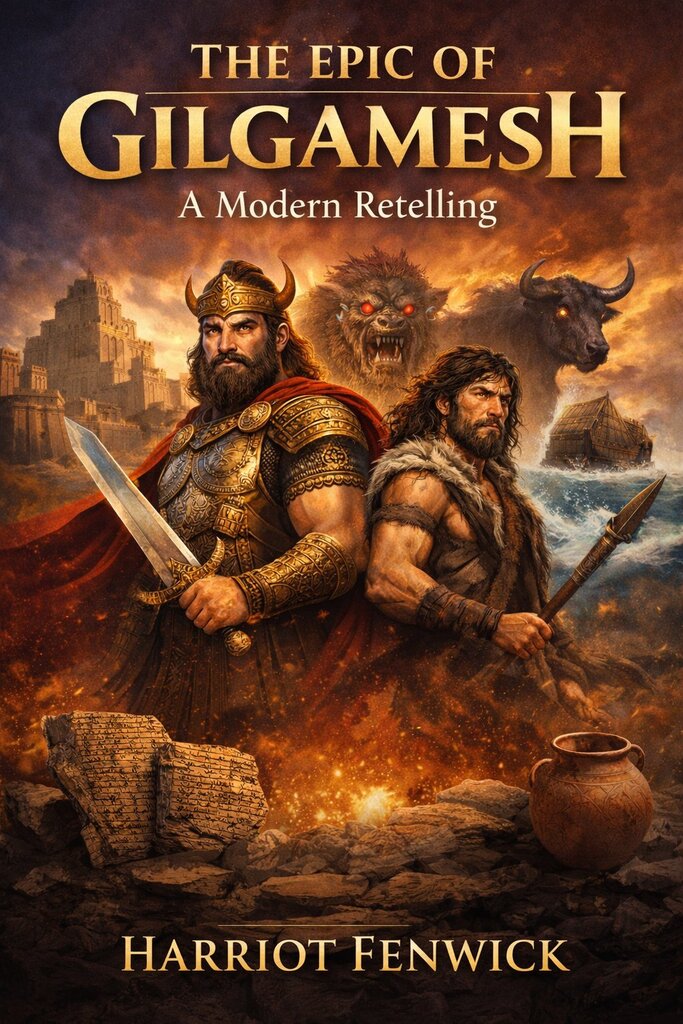
Gilgamesh begins in the ancient city of Uruk, where Gilgamesh reigns with almost divine power. He is described as two-thirds god and one-third man, a ruler unmatched in strength and ambition who builds towering walls and grand temples — yet also oppresses his people with arrogance and cruelty.
To balance his unchecked power, the gods create Enkidu, a wild man formed from clay who lives freely among the beasts. Enkidu’s encounter with civilization changes him, bringing him to Uruk where he dares to challenge Gilgamesh. Their clash leads not to enmity but to an unbreakable friendship — one of the central relationships of the epic.
Adventures That Shape a Hero
United, Gilgamesh and Enkidu embark on daring quests. They journey to the Cedar Forest to confront the monstrous guardian Humbaba and, later, slay the Bull of Heaven, sent by the goddess Ishtar to punish Gilgamesh for spurning her advances. These exploits test their courage but anger the gods — consequences they must face.
The gods ultimately decree Enkidu’s death as punishment. Enkidu falls ill and dies, leaving Gilgamesh devastated. Confronted with the finality of mortality, Gilgamesh embarks on a new quest — not for glory, but for eternal life.
The Quest for Immortality and Lasting Wisdom
Gilgamesh’s search leads him to Utnapishtim, the sole human granted eternal life after surviving a great flood. Though Gilgamesh fails the trials that could secure immortality, he gains something deeper: the realization that life’s true permanence lies not in endless days, but in the legacy we leave behind — in stories, in walls raised by human hands, and in the lives touched by deeds both great and small.
Why the Epic Still Matters
The Epic of Gilgamesh isn’t just a tale of gods and heroes. It explores the human heart — our fears, our friendships, our despair, and our hopes. It examines the universal struggle to come to terms with death, to find meaning in loss, and to understand what it means to live well. As the oldest surviving great work of literature, its influence echoes through centuries of storytelling and myth.